Vintage Heinz 57 Ketchup Recipes

I am visiting my hometown near Pittsburgh and I thought I’d share this nifty little vintage recipe booklet I found in the basement.

For those not familiar with Heinz history, the company was founded by Henry John Heinz, his cousin Frederick, and his brother John in 1876 in Pittsburgh. He began selling the first bottles of ketchup later that year.

In fact, there were four kinds of ketchup of different qualities and prices. The most expensive ketchup was spelled with a “K”, like its European version, while the lower grade ones were spelled “catsup”. The differences were in quality of tomato pulp used and the richness and type of spices used.

If you’re interested in making the original Ketchup, here’s the Keystone recipe:
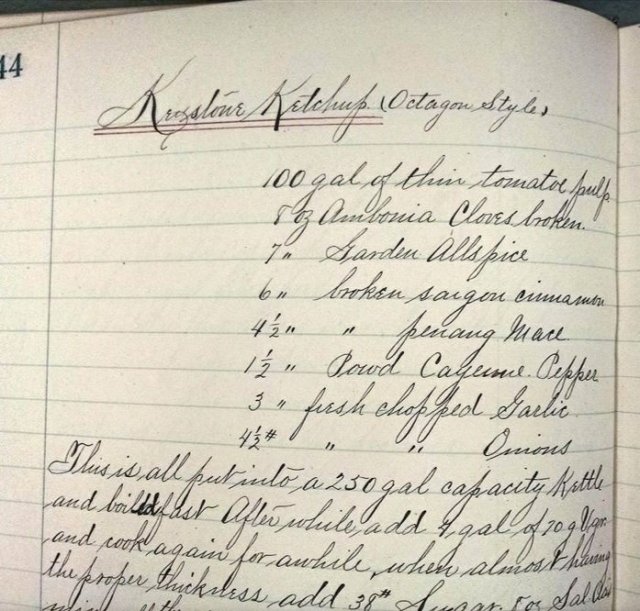
Source

Fun fact: The Heinz “57” varieties is a made-up number. He wanted something catchy to sell his brand and thought it had a nice ring to it after seeing “21 styles” advertised on a shoe store window. Heinz had over 60 products at the time.

Though the factory in Pittsburgh no longer produces ketchup, it still makes baby food and instant soups. The ketchup plants are now in Ohio and Iowa.

Also, if you happen to be in the Pittsburgh area for a visit, I highly recommend checking out the Heinz Museum! They have some fantastic exhibits on local history as well as the history of the Heinz company itself.

Check it out here: https://www.heinzhistorycenter.org/history-center/explore/

Don’t forget your Heinz pickle pin!

Thought I’d share a couple recipes from the advertising cookbook. Here’s a weeknight dinner staple that I always had as a kid:

Personally I prefer fresh mushrooms, but canned will do in a pinch.

And here’s a more unusual recipe that calls for ketchup:
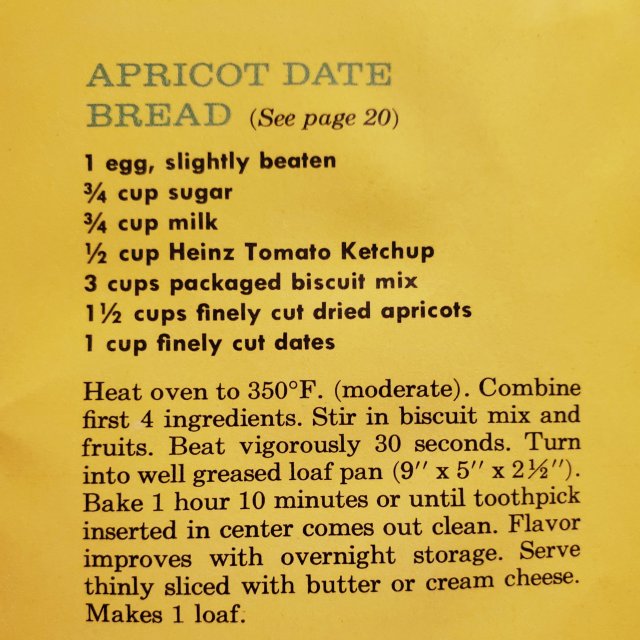
There are a ton of great vintage Heinz cookbooks out there, I recommend giving Ebay a browse.
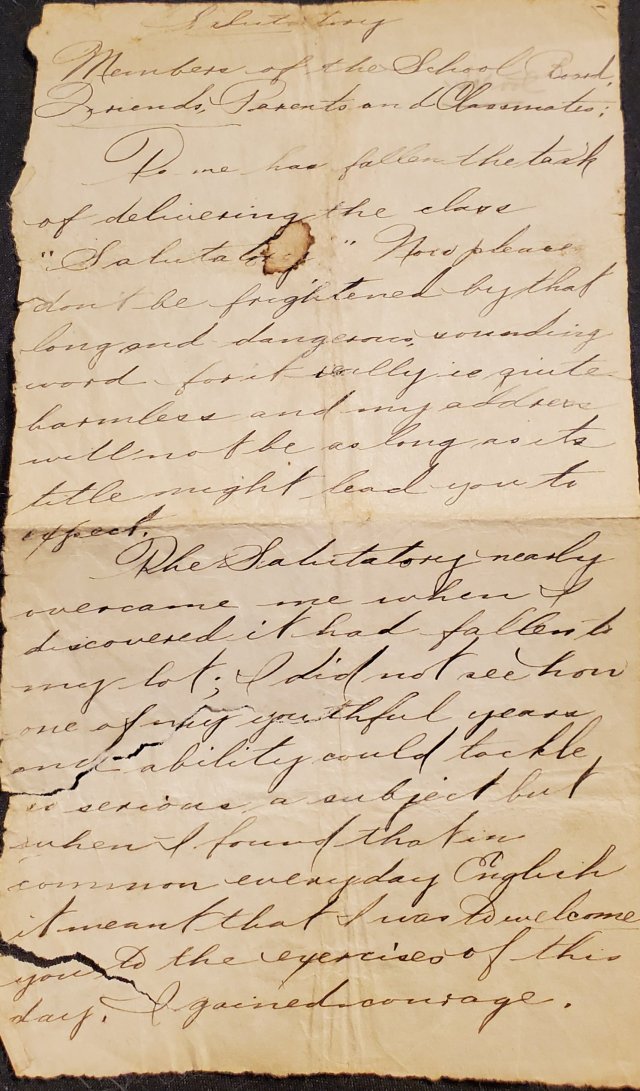
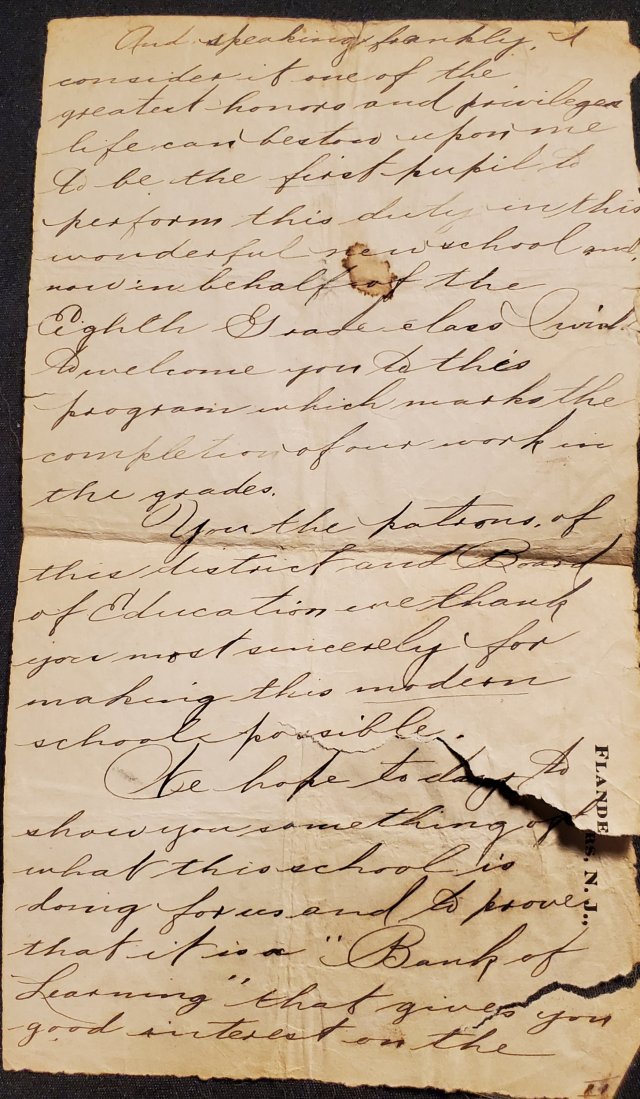
Salutatory Speech of 1929

I found this speech in one of my old books that I was flipping through. I love finding these little treasures hidden within the pages.

Salutatory

“Members of the School Board, Friends, Parents, and Classmates:

To me has fallen the task of delivering the class “Salutatory.” Now please don’t be frightened by that long and dangerous sounding word for it really is quite harmless and my address will not be as long as its title might lead you to expect.

The Salutatory nearly overcame me when I discovered it had fallen to my lot; I did not see how one of my youthful years and ability could tackle as serious a subject but when I found that in common everyday English it meant that I was to welcome you to the exercises of this day, I gained courage.

And speaking frankly, I consider it one of the greatest honors and privileges life can bestow upon me to be the first pupil to perform this duty in this wonderful new school and now in behalf of the Eight Grade class I wish to welcome you to this program which marks the completion of our work in the grades.

You the patrons of this district and Board of Education we thank you most sincerely for making this modern school possible.

We hope today to show you something of what this school is doing for us and to prove that it is a “Bank of Learning” that gives you good interest on the… “

The note cuts off there. Not only is the penmanship beautiful, but the speech is eloquent as well. Very impressive for an 8th grade student!

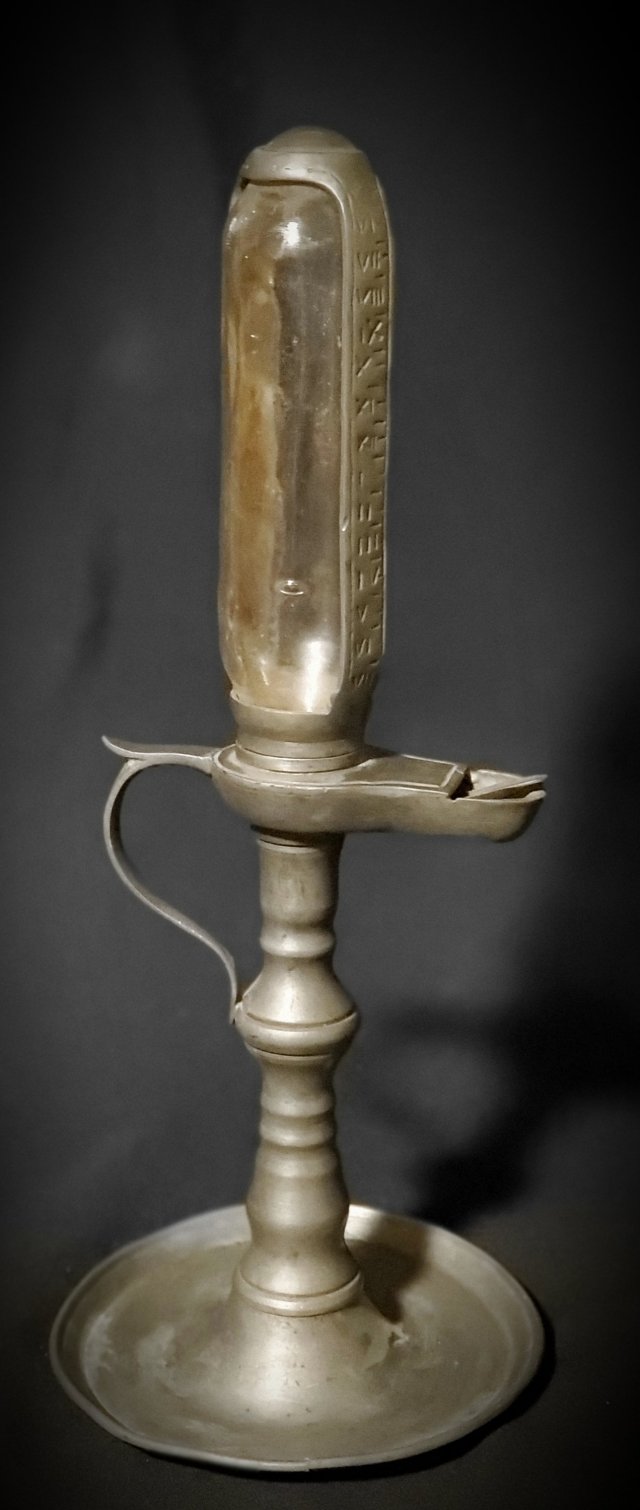
Time-keeping Oil Lamps: A Horological Oddity

There’s not much information available for these strange-looking oil lamps. Fashioned from pewter with a candlestick shape, these lamps held a glass ampoule that would’ve been filled with whale oil. As the whale oil burned at a consistent rate, the time could be read by the markings etched into the pewter that held the glass. These lamps were produced during the 18th and early 19th centuries. What specific purpose did these lamps serve?

There were many options for keeping track of time when the 18th century was in full swing. The first mechanical clocks were invented in Europe in the 14th century, followed by pendulum clocks in the mid 17th century. Pendulum clocks were the most accurate timekeeping devices up until the 20th century. The first portable/wearable clocks weren’t available until the 16th century and were not very accurate, however, and could gain as much as an hour a day or more. It wasn’t until the mid 17th century that they were improved upon and could keep time with more accuracy. Pocket watches were available, but considered a luxury item for the elite until the very end of the 18th century.

So at the time the oil lamp clock was made there are pendulum clocks (from grandfather size down to desktop size) and pocket watches (if you had the money). An oil lamp clock would be both portable and more affordable for someone in the mid to late 18th century.

One thing to note about the oil lamp is the numbering of the roman numerals on the side. Starting at 6 and ending at 7, it would seem that the numbers count the evening hours until sunrise. The light from the wick would’ve illuminated the roman numerals and the ampoule in the darkness. Doesn’t seem to be very useful in a household setting.

These functions would be useful for a ship’s navigator relying on the stars to plot his course. In order to calculate longitude while out of sight of land, it is necessary to have a time standard. The rolling of the ocean rendered the accurate pendulum clocks useless. The first accurate marine chronometer wasn’t invented until the latter half of the 18th century. Pocket watches were extremely expensive. That leaves oil lamp clocks, with the steady burning of the whale oil. The light they gave off would’ve been useful for reading charts. More than likely this was a ship’s tool to help navigate by the moon and stars.

The use of whale oil as an illuminant has a very short period of use from the mid 1800s to the late 19th century, when it was replaced by kerosene. That makes these lamps somewhat hard to find. I was lucky enough to pick one up on Ebay a while back, but I’ve yet to see them in an antiques shop.

G.H. Michel, Embalming Pioneer

20190606_1448499180558054843823777.jpg

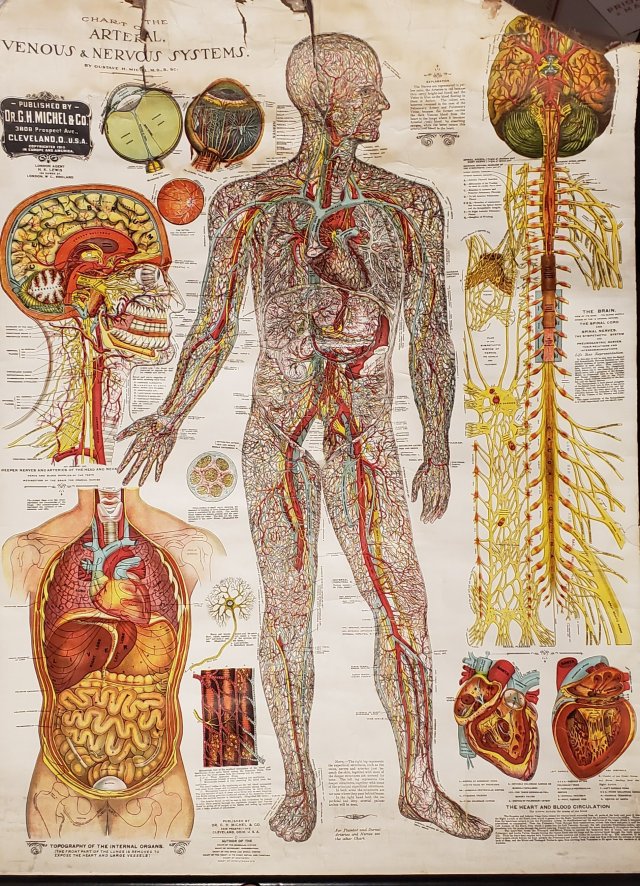
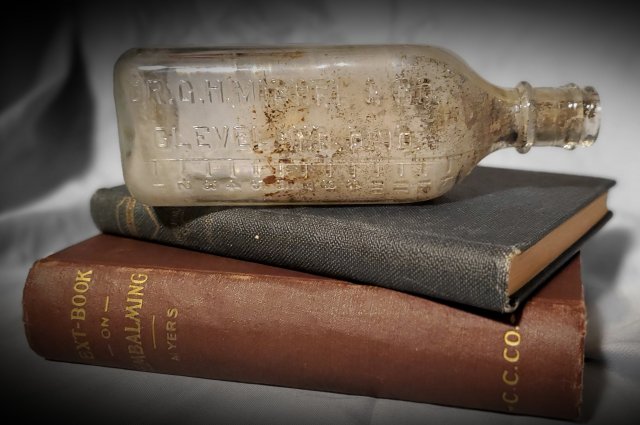
Recently I acquired a very intricate and very old medical chart of the circulatory system, illustrated by Dr. G.H. Michel. Soon after that I was at an antiques show and recognized a turn-of-the-century glass bottle with the very same name. Who was this Dr. Michel?

20190605_1729583034369314792854199.jpg

I ran a search online for his name and came up with a company that makes an embalming fluid called RestorSkin. They have a small biography page for him. According to their website, Gustave H. Michel was a doctor in the French foreign legion, stationed in Africa. When a soldier lost his life abroad, particularly in hot climates, there was always the issue of preserving the bodies so that they could be returned to their families for burial. He developed an alcohol-based embalming fluid that he called Regina. His fomula also worked well for preserving bodies for anatomical study, which was later useful for the production of his charts.

Dr. Michel later moved to Cleveland, Ohio, where he founded the Dr. G.H. Michel company in 1902. Here he went on to produce Regina, Ozoform, and many elaborate anatomical charts. He also authored a book by the title of “The Scientific Embalmer” in 1913. It’s very hard to find, but occasionally they appear on Abebooks. There is also a free version available here. His company continues to produce products for the funeral industry today, including RestorSkin embalming fluid. Their website is: www.ghmichel.com